

Key Takeaways
- Research on signalized intersections links sun glare to a measurably higher crash risk, with eastbound morning and westbound evening commuters facing the greatest exposure
- Polarized lenses filter reflected light from flat surfaces like roads, but drivers should check that polarization doesn’t wash out dashboard or head-up display readability before relying on it
- Vehicle visors should be set before driving begins since adjusting a visor mid-drive takes eyes off the road at the worst possible moment
- A clean, crack-free windshield and extra following distance both play a role in cutting glare-related risk, alongside polarized accessories highlighted by SmartAdditions
Low sun, wet roads, and a bright afternoon sky can turn a routine drive into a squinting, white-knuckle guessing game. Cutting down that glare takes more than one trick; it takes a combination of habits and gear working together.
This guide walks through what actually helps, what to watch out for, and how to keep essential dashboard information visible while reducing blinding light.
Rear-End and Angle Crashes Spike During Glare Hours
Sun glare isn’t just a minor inconvenience behind the wheel. Research analyzing crashes at signalized intersections found that rear-end and angle collisions are significantly overrepresented during morning and evening glare windows, the same hours when most people are commuting. Eastbound drivers in the morning and westbound drivers in the afternoon face the highest odds of a glare-related crash, and the effect is especially pronounced in early spring and fall rather than the peak summer months most drivers would expect.
That matters because it means glare risk doesn’t follow intuition. A driver may feel more alert on a crisp March morning than on a hot July afternoon, while the data points the other way. The moments of greatest risk often line up with the moments of least preparation, particularly during turns, lane changes, or sudden stops when a sudden wall of reflected light can be genuinely blinding.
A single fix rarely solves the whole problem when glare comes from multiple directions at once. Combining tools and habits, rather than leaning on just one, tends to produce the biggest difference in visibility.
Why Polarized Lenses Cut Glare
Polarized lenses work by filtering out a specific kind of light: the horizontally polarized glare that bounces off flat, reflective surfaces like roads, hoods, and wet pavement. That filtering is why polarized lenses or polarized visor panels make such a noticeable difference during the brightest parts of the day.
What Polarization Actually Filters
When sunlight bounces off a flat surface, it becomes polarized, meaning the light waves line up in a single direction instead of scattering randomly. A polarized lens blocks much of that aligned light, which cuts glare from wet roads and shiny surfaces while often making the road appear darker and easier to focus on. Many drivers notice that polarization also reveals road details, like texture changes or standing water, that would otherwise disappear into a wash of reflected light.
When to Skip Polarized Lenses
Polarization is a powerful tool, but it is not the right choice every time. A few situations call for leaving the polarized lens off:
- Night driving: polarized lenses are not meant for low-light conditions and can make it harder to see in the dark.
- Icy roads: reflected light off ice can actually help a driver spot a hazard, and polarization may mask that warning sign.
- Unreadable displays: if polarization makes a dashboard screen or head-up display dim or unreadable, a different lens option should be used instead.
Using Your Visor the Right Way
A sun visor remains one of the simplest, most direct ways to block overhead and frontal sun. It works differently than a polarized lens; rather than filtering reflected light, a visor blocks direct sunlight from hitting the eyes in the first place. The two tools address different glare sources, which is part of why combining them tends to work so well.
A visor does come with a tradeoff worth remembering: it can also block part of the field of vision if positioned too low or too far forward. That means visor placement deserves a little care rather than a quick flip-down on autopilot.
Set Position Before You Drive, Not During
The safest approach is to find the right visor position before pulling out of the driveway, not while already moving. Adjusting a visor mid-drive means taking a hand off the wheel and eyes off the road, right when quick reactions matter most. For side-angled sun, many factory visors can pivot from the windshield position to cover the side window instead, which helps address glare that shifts as a route changes direction. Testing both the forward and side positions ahead of time, and getting comfortable with how each one affects visibility, pays off once actual driving conditions get tricky.
Check Your Displays Before You Rely on Tint
Polarized accessories cut glare well, but they can also interact with digital displays in ways that catch drivers off guard. A quick check before relying on any polarized lens or panel can prevent a frustrating surprise on the road.
Testing Dashboards and Head-Up Displays First
Before counting on a polarized lens for a regular commute, it helps to sit in the normal driving position, with the vehicle safely parked, and look through the lens at the dashboard, infotainment screen, and any head-up display. Some digital displays dim or become harder to read through polarized lenses, and catching that ahead of time avoids a bad surprise once the drive is already underway. If a polarized lens makes an essential display unreadable, switching to a different lens option is the safer move rather than continuing with that pairing.
Spotting and Fixing a Panel Reflection
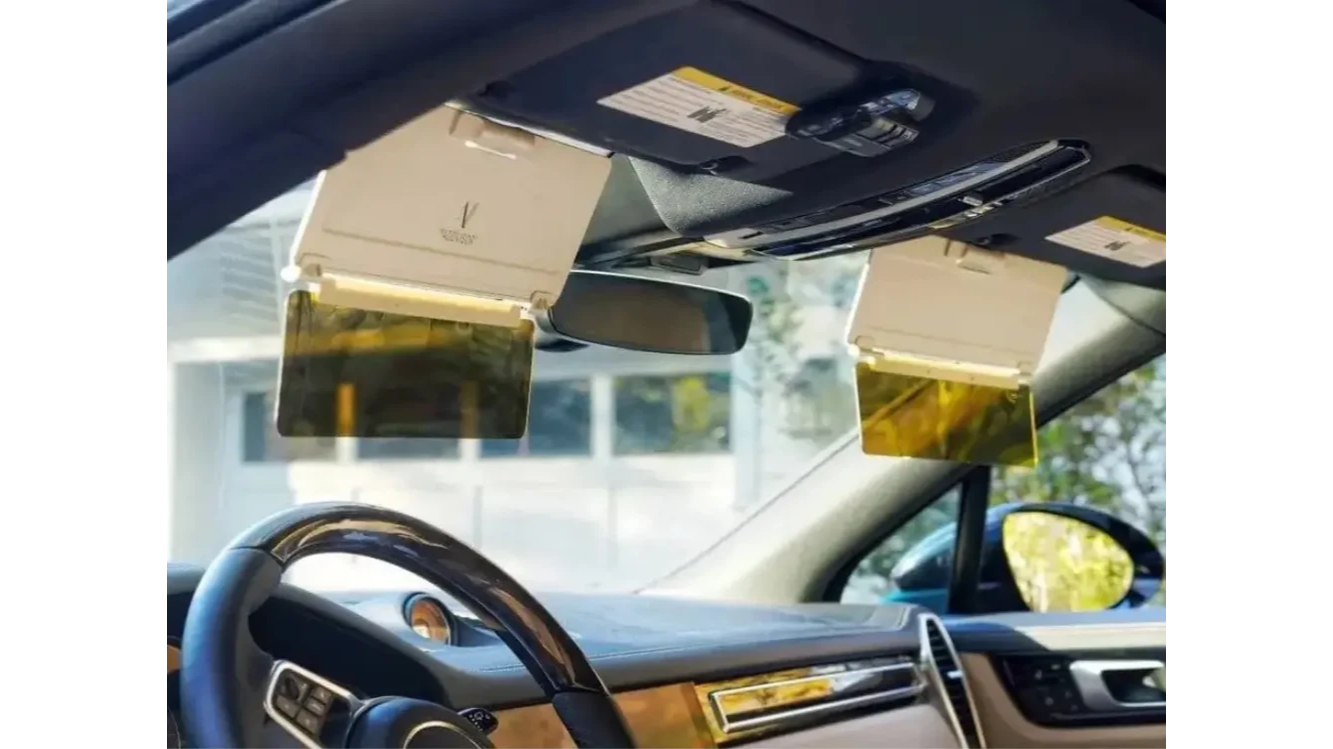
A tinted panel can sometimes throw a reflection of its own, especially at certain angles relative to the sun. When that happens with a tinted visor panel, changing the angle, tilting the bottom of the panel toward or away from the driver, often clears up the reflection. It’s a small adjustment, but one worth knowing before a reflection becomes a distraction at a bad moment.
Other Habits That Reduce Glare
Tools like visors and polarized lenses do a lot of the heavy lifting, but a few additional habits round out a solid glare-reduction routine.
Keep the Windshield Clean and Crack-Free
A dirty or pitted windshield scatters light in unpredictable ways, which makes glare worse even with good visors and lenses in place. Keeping the glass clean inside and out, checking for pitting or small cracks, and keeping the wipers in good working order all contribute to clearer visibility during glare-heavy stretches of driving.
Add Following Distance in Low Sun
When sun glare makes it harder to see the vehicle ahead clearly, leaving extra following room creates a buffer for reaction time. That little bit of extra space can make the difference between a smooth stop and a stressful one if the car ahead brakes suddenly.
Pull Over When Visibility Turns Unsafe
Sometimes glare is simply too intense for any combination of tools to fix in the moment. When that happens, the safest choice is to pull over in a safe location and wait for the sun’s angle to shift rather than pushing through impaired visibility. Knowing when to stop rather than squint through it often matters more than any single accessory.
Combine Methods, Don’t Rely on One Fix
No single tool solves every kind of glare. Polarized lenses handle reflected light from roads and wet surfaces, visors block direct sun from the front or side, a clean windshield reduces scattering, and extra following distance buys reaction time when visibility dips. Using these together, rather than leaning on one alone, builds a stronger defense against the unpredictable angles that make glare so dangerous in the first place.
For drivers looking for a practical way to manage sun from multiple directions without constantly adjusting a single visor, SmartAdditions has more resources highlighting dedicated polarized panels as a potential next step for countering low-sun conditions.
SmartAdditions, inc.
help@smartadditions.com
470 New York 211
STE 24 #1173
Middletown
NY
10940
United States
