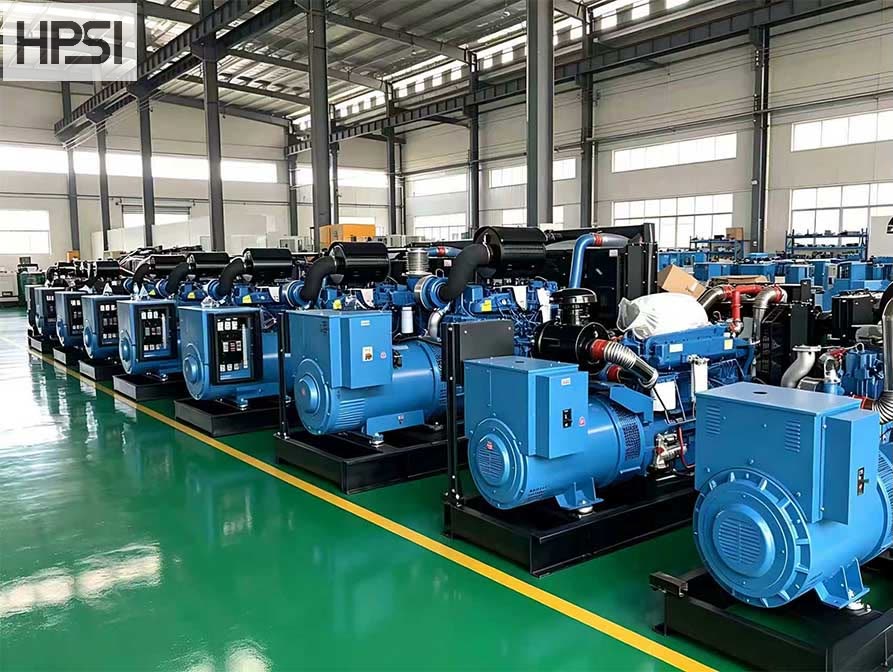

XIAN, SHAANXI, CHINA, October 30, 2026 /EINPresswire.com/ — Inside a high-density cloud facility, server racks process millions of real-time transactions around the clock. When severe weather strikes and the grid drops without warning, automatic transfer switches instantly engage standby power. System reliability in those seconds hinges on much more than a nameplate kVA rating or purchase price. Long-term uptime depends on fast paralleling, instant load acceptance, thermal endurance, fuel efficiency across changing loads, and minimal maintenance disruption over years of operation. To protect compute infrastructure against grid failures, operators increasingly rely on China top-rated MTU container generator solutions engineered for heavy-duty readiness. Housing high-performance MTU engines inside climate-resilient enclosures ensures compute workloads stay uninterrupted.
As cloud and AI workloads push server densities past traditional limits, backup power architectures face higher performance demands. Standard enclosures often struggle with dynamic step-loading and heat, causing recovery delays or power derating. Leveraging an integrated supply chain across four core manufacturing bases, Huaxin Power Systems International Co., Ltd., delivers customized equipment from 5 to 3750 kVA. By engineering MTU container generator solutions tailored for tier-three and tier-four data facilities, HPSI eliminates the root causes of efficiency loss in standby power.
Powertrain Dynamics and Step Load Performance
Standard generator enclosures typically feature generic diesel engines mated to off-the-shelf mechanical governors. While suitable for basic commercial backup, these standard units display noticeable frequency dips and transient voltage drop when subjected to sudden IT load spikes. In a modern data center, step loads can jump instantly from 20% baseline up to 80% capacity as server clusters initiate automatic failover sequences or dense processing arrays spin up. Generic powertrains frequently take longer to stabilize speed, increasing the risk of upstream uninterrupted power supply units transferring back to battery mode or dropping load completely.
In contrast, specialized MTU container generator designs utilize MTU 2000 or 4000 series engines equipped with advanced common rail fuel injection and electronic engine management systems. HPSI matches these high-displacement engines to the operational profiles of modern compute hubs. The electronic speed governor monitors real-time combustion parameters, making micro-adjustments to fuel delivery within milliseconds. This precise fuel control allows the generator set to accept massive single-step loads with minimal frequency deflection and fast recovery times. Furthermore, because data center standby units often run at partial loads during routine monthly testing or reduced facility occupancy, MTU engines optimize air-to-fuel ratios across fractional load steps. This prevents wet stacking, reduces unburned carbon deposits, and maintains high fuel economy whether operating at 30% or 100% rated output.
Thermal Architecture and Spatial Optimization
Thermal management represents another vital area where standard generator canopies encounter operational limits. Generic enclosures rely on standard rectangular ducting and basic intake louvers sized for moderate climates. When installed directly adjacent to high-density data centers—where ambient temperatures frequently rise due to concentrated hot-air exhaust—standard enclosures suffer from severe airflow restrictions. Restricted airflow elevates internal enclosure temperatures, leading to engine overheating, degraded alternator insulation life, and thermal power derating just when full power output is required.
To prevent thermal bottlenecking, HPSI designs custom 20-foot and 40-foot containerized enclosures with engineered airflow dynamics. Utilizing advanced computational fluid dynamics to map internal pressure drops, HPSI incorporates dual-side intake plenum chambers, optimized airflow baffles, and isolated vertical exhaust silencers. This layout separates cold intake air from hot radiator discharge, eliminating recirculation loops even in tightly packed outdoor yards. The internal spatial arrangement leaves ample clearance around the MTU engine block, enabling maintenance technicians to perform routine filter replacements, oil sampling, and valve adjustments safely without removing external housing panels. By keeping internal ambient temperatures stable, Huaxin Power Systems International Co., Ltd. ensures that the generator delivers its full rated electrical output without derating, even in challenging environmental conditions reaching 50 degrees Celsius.
Integrated Control Systems, Remote Operations, and Modular Scaling
Managing standby power for expanding cloud facilities requires robust control intelligence and modular expansion capabilities. Standard enclosure setups are frequently delivered with basic single-piece Automatic Mains Failure control modules. While these simple controllers handle basic utility outage sensing and single-generator starting, they offer limited communication protocols, making multi-unit synchronization and remote building management system integration complex and prone to operational errors.
To streamline multi-unit management, MTU container generator solutions supplied by HPSI incorporate advanced digital paralleling controllers from industry leaders like DeepSea and ComAp. These sophisticated control systems support multi-unit busbar synchronization, load sharing, and automated generator sequencing based on real-time facility demand. When a grid failure occurs, multiple containerized sets start simultaneously, synchronize within seconds, and connect to a common distribution bus. Built-in RS485, CAN bus, and Ethernet communications allow operators to monitor oil pressure, coolant temperatures, output voltage, and historical fault logs directly through central monitoring dashboards. As power demand grows, facility operators can add incremental MTU container generator units without replacing central control architecture, protecting initial infrastructure investments.
Summary: Alignment with Data Center Operational Metrics
When evaluating backup power equipment, facility engineers must look beyond initial capital expenditure and assess performance through comprehensive operational metrics. Evaluating backup units based on fuel consumed per kilowatt of actual IT load, spatial footprint requirements, and long-term risk of unscheduled downtime highlights the advantages of purpose-built equipment. Standard generic enclosures may offer a lower initial purchase price, but their higher risk of thermal derating, slower transient response, and elevated maintenance costs can expose sensitive compute infrastructure to expensive power interruptions.
By combining advanced MTU engine technology with custom enclosure engineering, HPSI provides global data center operators with highly reliable standby power platforms. Supported by extensive manufacturing capabilities, rigorous quality control testing, and global technical assistance, Huaxin Power Systems International Co., Ltd. delivers turnkey power solutions engineered to protect mission-critical operations. As computing demand continues to surge across global markets, purpose-built MTU container generator systems stand out as a proven choice for high-availability data infrastructure.
For detailed technical specifications and customized engineering support, please visit: https://www.hpsigenerator.com/
HPSI
HPSI
Legal Disclaimer:
EIN Presswire provides this news content “as is” without warranty of any kind. We do not accept any responsibility or liability
for the accuracy, content, images, videos, licenses, completeness, legality, or reliability of the information contained in this
article. If you have any complaints or copyright issues related to this article, kindly contact the author above.

Media gallery